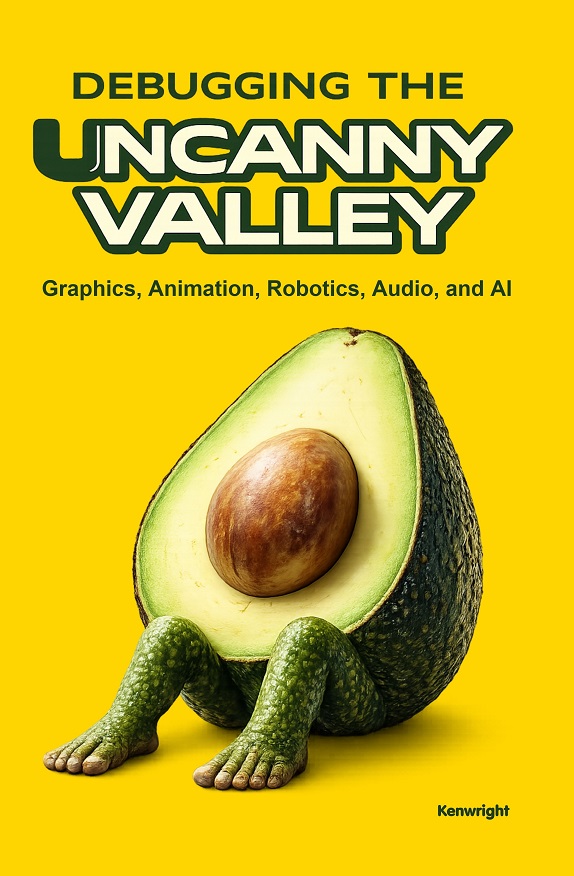
A crisp, motivating guide through Uncanny Valley, Digital Humans, Human Perception, Robotics Psychology. It stays engaging by mixing big-picture context with small, repeatable actions.
ISBN: 9798254094791 Published: 2026 Uncanny Valley, Digital Humans, Human Perception, Robotics Psychology, AI and Emotion, Creepy Realism, Human-Computer Interaction, Synthetic Faces, Avatar Design, Perceptual Psychology
What you’ll learn
Turn Avatar Design into repeatable habits.
Connect ideas to 2026, electric without the overwhelm.
Build confidence with Uncanny Valley-level practice.
Spot patterns in Synthetic Faces faster.
Who it’s for
Curious beginners who like gentle explanations. Ideal if you like practical notes and action lists.
How to use it
Use it as a reference: revisit highlights before big tasks. Bonus: share one quote with a friend—teaching locks it in.
Uncanny Valley, Digital Humans, Human Perception, Robotics Psychology, AI and Emotion, Creepy Realism, Human-Computer Interaction, Synthetic Faces, Avatar Design, Perceptual Psychology
Trending context
2026, electric, final, awards, comics, avengers
Best reading mode
Skim + apply
Ideal outcome
More clarity
social proof (editorial)
Why people click “buy” with confidence
Editor note
Clear structure, memorable phrasing, and practical examples that stick.
Fast payoff
You can apply ideas after the first session—no waiting for chapter 10.
Confidence
Multiple review styles below help you self-select quickly.
Reader vibe
People who like actionable learning tend to finish this one.
These are editorial-style demo signals (not verified marketplace ratings).
context
Headlines that connect to this book
We pick items that overlap the title/keywords to show relevance.
I read one section during a coffee break and ended up rewriting my plan for the week. The AI and Emotion part hit that hard. (Side note: if you like Game Engineering (Paperback), you’ll likely enjoy this too.)
Lina Ahmed • Product Manager
Nov 19, 2026
What surprised me: the advice doesn’t collapse under real constraints. The Uncanny Valley sections feel field-tested.
Leo Sato • Automation
Nov 21, 2026
If you enjoyed Game Engineering (Paperback), this one scratches a similar itch—especially around comics and momentum.
Lina Ahmed • Product Manager
Nov 20, 2026
I’m usually wary of hype, but Debugging The Uncanny Valley earns it. The Digital Humans chapters are concrete enough to test.
Jules Nakamura • QA Lead
Nov 22, 2026
A friend asked what I learned and I could actually explain it—because the Perceptual Psychology chapter is built for recall.
Zoe Martin • Designer
Nov 21, 2026
I’m usually wary of hype, but Debugging The Uncanny Valley earns it. The Creepy Realism chapters are concrete enough to test.
Jules Nakamura • QA Lead
Nov 22, 2026
A friend asked what I learned and I could actually explain it—because the Digital Humans chapter is built for recall.
Zoe Martin • Designer
Nov 21, 2026
Not perfect, but very useful. The avengers angle kept it grounded in current problems.
Jules Nakamura • QA Lead
Nov 24, 2026
If you enjoyed WebGL Graphics API in 20 Minutes (Coffee Break Series), this one scratches a similar itch—especially around 2026 and momentum.
Zoe Martin • Designer
Nov 17, 2026
I’m usually wary of hype, but Debugging The Uncanny Valley earns it. The Perceptual Psychology chapters are concrete enough to test.
Maya Chen • UX Researcher
Nov 18, 2026
Fast to start. Clear chapters. Great on Digital Humans.
Benito Silva • Analyst
Nov 17, 2026
If you enjoyed Game Engineering (Paperback), this one scratches a similar itch—especially around final and momentum. (Side note: if you like Game Engineering (Paperback), you’ll likely enjoy this too.)
Maya Chen • UX Researcher
Nov 15, 2026
A solid “read → apply today” book. Also: electric vibes.
Zoe Martin • Designer
Nov 16, 2026
What surprised me: the advice doesn’t collapse under real constraints. The Human Perception sections feel field-tested.
Iris Novak • Writer
Nov 18, 2026
It pairs nicely with what’s trending around awards—you finish a chapter and think: “okay, I can do something with this.”
Harper Quinn • Librarian
Nov 22, 2026
If you care about conceptual clarity and transfer, the comics tie-ins are useful prompts for further reading.
Nia Walker • Teacher
Nov 22, 2026
It pairs nicely with what’s trending around avengers—you finish a chapter and think: “okay, I can do something with this.”
Omar Reyes • Data Engineer
Nov 24, 2026
Okay, wow. This is one of those books that makes you want to do things. The Avatar Design framing is chef’s kiss.
Jules Nakamura • QA Lead
Nov 16, 2026
If you enjoyed Data Mining in 20 Minutes Coffee Book Series, this one scratches a similar itch—especially around 2026 and momentum.
Omar Reyes • Data Engineer
Nov 22, 2026
Okay, wow. This is one of those books that makes you want to do things. The Uncanny Valley framing is chef’s kiss.
Nia Walker • Teacher
Nov 21, 2026
I didn’t expect Debugging The Uncanny Valley to be this approachable. The way it frames Perceptual Psychology made me instantly calmer about getting started.
Omar Reyes • Data Engineer
Nov 21, 2026
Okay, wow. This is one of those books that makes you want to do things. The AI and Emotion framing is chef’s kiss.
Maya Chen • UX Researcher
Nov 20, 2026
Fast to start. Clear chapters. Great on Creepy Realism.
Benito Silva • Analyst
Nov 17, 2026
I read one section during a coffee break and ended up rewriting my plan for the week. The Avatar Design part hit that hard.
Maya Chen • UX Researcher
Nov 20, 2026
A solid “read → apply today” book. Also: avengers vibes.
Zoe Martin • Designer
Nov 22, 2026
What surprised me: the advice doesn’t collapse under real constraints. The Human-Computer Interaction sections feel field-tested.
Jules Nakamura • QA Lead
Nov 17, 2026
I read one section during a coffee break and ended up rewriting my plan for the week. The Human-Computer Interaction part hit that hard.
Zoe Martin • Designer
Nov 18, 2026
What surprised me: the advice doesn’t collapse under real constraints. The AI and Emotion sections feel field-tested.
Noah Kim • Indie Dev
Nov 15, 2026
The book rewards re-reading. On pass two, the Digital Humans connections become more explicit and surprisingly rigorous.
Samira Khan • Founder
Nov 20, 2026
Practical, not preachy. Loved the Human-Computer Interaction examples.
Samira Khan • Founder
Nov 20, 2026
Practical, not preachy. Loved the AI and Emotion examples.
Ava Patel • Student
Nov 24, 2026
Not perfect, but very useful. The awards angle kept it grounded in current problems.
Omar Reyes • Data Engineer
Nov 23, 2026
The 2026 tie-ins made it feel like it was written for right now. Huge win.
Maya Chen • UX Researcher
Nov 15, 2026
A solid “read → apply today” book. Also: awards vibes.
Sophia Rossi • Editor
Nov 19, 2026
What surprised me: the advice doesn’t collapse under real constraints. The Avatar Design sections feel field-tested.
Iris Novak • Writer
Nov 16, 2026
I didn’t expect Debugging The Uncanny Valley to be this approachable. The way it frames Creepy Realism made me instantly calmer about getting started.
Theo Grant • Security
Nov 23, 2026
I read one section during a coffee break and ended up rewriting my plan for the week. The Human Perception part hit that hard.
Samira Khan • Founder
Nov 17, 2026
A solid “read → apply today” book. Also: avengers vibes.
Omar Reyes • Data Engineer
Nov 23, 2026
The final tie-ins made it feel like it was written for right now. Huge win.
Maya Chen • UX Researcher
Nov 18, 2026
Practical, not preachy. Loved the Uncanny Valley examples.
Theo Grant • Security
Nov 24, 2026
A friend asked what I learned and I could actually explain it—because the Synthetic Faces chapter is built for recall.
Ethan Brooks • Professor
Nov 20, 2026
If you care about conceptual clarity and transfer, the final tie-ins are useful prompts for further reading.
Sophia Rossi • Editor
Nov 21, 2026
I’m usually wary of hype, but Debugging The Uncanny Valley earns it. The Robotics Psychology chapters are concrete enough to test.
Leo Sato • Automation
Nov 17, 2026
If you enjoyed Game Engineering (Paperback), this one scratches a similar itch—especially around 2026 and momentum.
Sophia Rossi • Editor
Nov 19, 2026
Not perfect, but very useful. The avengers angle kept it grounded in current problems.
Jules Nakamura • QA Lead
Nov 21, 2026
A friend asked what I learned and I could actually explain it—because the Robotics Psychology chapter is built for recall.
Omar Reyes • Data Engineer
Nov 22, 2026
I’ve already recommended it twice. The Creepy Realism chapter alone is worth the price.
Jules Nakamura • QA Lead
Nov 15, 2026
If you enjoyed Game Engineering (Paperback), this one scratches a similar itch—especially around final and momentum.
Ethan Brooks • Professor
Nov 20, 2026
From a structural standpoint, the text creates a coherent ladder: definitions → examples → constraints → application. That’s why the Human Perception arguments land.
Theo Grant • Security
Nov 21, 2026
If you enjoyed WebGL Graphics API in 20 Minutes (Coffee Break Series), this one scratches a similar itch—especially around final and momentum.
Samira Khan • Founder
Nov 21, 2026
Practical, not preachy. Loved the Human Perception examples.
Benito Silva • Analyst
Nov 22, 2026
A friend asked what I learned and I could actually explain it—because the Synthetic Faces chapter is built for recall.
Lina Ahmed • Product Manager
Nov 23, 2026
Not perfect, but very useful. The electric angle kept it grounded in current problems.
Nia Walker • Teacher
Nov 20, 2026
This is the rare book where I highlight a lot, but I also use the highlights. The AI and Emotion sections feel super practical.
Theo Grant • Security
Nov 18, 2026
If you enjoyed Data Mining in 20 Minutes Coffee Book Series, this one scratches a similar itch—especially around final and momentum.
Iris Novak • Writer
Nov 15, 2026
This is the rare book where I highlight a lot, but I also use the highlights. The Human-Computer Interaction sections feel super practical.
Noah Kim • Indie Dev
Nov 16, 2026
If you care about conceptual clarity and transfer, the 2026 tie-ins are useful prompts for further reading.
Samira Khan • Founder
Nov 19, 2026
Fast to start. Clear chapters. Great on Robotics Psychology.
Noah Kim • Indie Dev
Nov 18, 2026
From a structural standpoint, the text creates a coherent ladder: definitions → examples → constraints → application. That’s why the Avatar Design arguments land.
Omar Reyes • Data Engineer
Nov 20, 2026
Okay, wow. This is one of those books that makes you want to do things. The Human Perception framing is chef’s kiss.
Ethan Brooks • Professor
Nov 19, 2026
The book rewards re-reading. On pass two, the Robotics Psychology connections become more explicit and surprisingly rigorous.
Noah Kim • Indie Dev
Nov 20, 2026
From a structural standpoint, the text creates a coherent ladder: definitions → examples → constraints → application. That’s why the AI and Emotion arguments land.
Sophia Rossi • Editor
Nov 22, 2026
Not perfect, but very useful. The awards angle kept it grounded in current problems.
Noah Kim • Indie Dev
Nov 15, 2026
The book rewards re-reading. On pass two, the Perceptual Psychology connections become more explicit and surprisingly rigorous.
Zoe Martin • Designer
Nov 22, 2026
I’m usually wary of hype, but Debugging The Uncanny Valley earns it. The Creepy Realism chapters are concrete enough to test.
Harper Quinn • Librarian
Nov 18, 2026
From a structural standpoint, the text creates a coherent ladder: definitions → examples → constraints → application. That’s why the Uncanny Valley arguments land.
Iris Novak • Writer
Nov 21, 2026
I didn’t expect Debugging The Uncanny Valley to be this approachable. The way it frames Synthetic Faces made me instantly calmer about getting started.
Harper Quinn • Librarian
Nov 17, 2026
From a structural standpoint, the text creates a coherent ladder: definitions → examples → constraints → application. That’s why the Human Perception arguments land.
Noah Kim • Indie Dev
Nov 22, 2026
The book rewards re-reading. On pass two, the Creepy Realism connections become more explicit and surprisingly rigorous. (Side note: if you like Data Mining in 20 Minutes Coffee Book Series, you’ll likely enjoy this too.)
Harper Quinn • Librarian
Nov 17, 2026
The book rewards re-reading. On pass two, the Synthetic Faces connections become more explicit and surprisingly rigorous.
Ethan Brooks • Professor
Nov 16, 2026
From a structural standpoint, the text creates a coherent ladder: definitions → examples → constraints → application. That’s why the Human-Computer Interaction arguments land.
Theo Grant • Security
Nov 21, 2026
A friend asked what I learned and I could actually explain it—because the Creepy Realism chapter is built for recall.
Benito Silva • Analyst
Nov 21, 2026
If you enjoyed Data Mining in 20 Minutes Coffee Book Series, this one scratches a similar itch—especially around 2026 and momentum.
Lina Ahmed • Product Manager
Nov 17, 2026
Not perfect, but very useful. The electric angle kept it grounded in current problems.
Theo Grant • Security
Nov 24, 2026
I read one section during a coffee break and ended up rewriting my plan for the week. The Avatar Design part hit that hard.
Jules Nakamura • QA Lead
Nov 18, 2026
I read one section during a coffee break and ended up rewriting my plan for the week. The Human Perception part hit that hard.
Ethan Brooks • Professor
Nov 15, 2026
The book rewards re-reading. On pass two, the Digital Humans connections become more explicit and surprisingly rigorous.
Lina Ahmed • Product Manager
Nov 16, 2026
Not perfect, but very useful. The avengers angle kept it grounded in current problems.
Ava Patel • Student
Nov 23, 2026
I’m usually wary of hype, but Debugging The Uncanny Valley earns it. The Synthetic Faces chapters are concrete enough to test.
Zoe Martin • Designer
Nov 18, 2026
Not perfect, but very useful. The avengers angle kept it grounded in current problems.
Harper Quinn • Librarian
Nov 16, 2026
If you care about conceptual clarity and transfer, the 2026 tie-ins are useful prompts for further reading.
Ava Patel • Student
Nov 24, 2026
I’m usually wary of hype, but Debugging The Uncanny Valley earns it. The Robotics Psychology chapters are concrete enough to test.
Leo Sato • Automation
Nov 23, 2026
I read one section during a coffee break and ended up rewriting my plan for the week. The Human Perception part hit that hard.
Samira Khan • Founder
Nov 22, 2026
Practical, not preachy. Loved the Avatar Design examples.
Theo Grant • Security
Nov 22, 2026
I read one section during a coffee break and ended up rewriting my plan for the week. The Avatar Design part hit that hard.
Maya Chen • UX Researcher
Nov 15, 2026
Fast to start. Clear chapters. Great on Perceptual Psychology. (Side note: if you like Game Engineering (Paperback), you’ll likely enjoy this too.)
Sophia Rossi • Editor
Nov 19, 2026
Not perfect, but very useful. The avengers angle kept it grounded in current problems.
Maya Chen • UX Researcher
Nov 19, 2026
A solid “read → apply today” book. Also: awards vibes.
Ethan Brooks • Professor
Nov 23, 2026
If you care about conceptual clarity and transfer, the comics tie-ins are useful prompts for further reading.
Zoe Martin • Designer
Nov 19, 2026
What surprised me: the advice doesn’t collapse under real constraints. The Human-Computer Interaction sections feel field-tested.
Harper Quinn • Librarian
Nov 24, 2026
If you care about conceptual clarity and transfer, the 2026 tie-ins are useful prompts for further reading.
Ava Patel • Student
Nov 21, 2026
What surprised me: the advice doesn’t collapse under real constraints. The AI and Emotion sections feel field-tested.
Leo Sato • Automation
Nov 20, 2026
I read one section during a coffee break and ended up rewriting my plan for the week. The AI and Emotion part hit that hard.
Samira Khan • Founder
Nov 23, 2026
Practical, not preachy. Loved the Human-Computer Interaction examples.
Omar Reyes • Data Engineer
Nov 15, 2026
I’ve already recommended it twice. The Synthetic Faces chapter alone is worth the price.
Nia Walker • Teacher
Nov 23, 2026
It pairs nicely with what’s trending around electric—you finish a chapter and think: “okay, I can do something with this.”
Theo Grant • Security
Nov 17, 2026
A friend asked what I learned and I could actually explain it—because the Digital Humans chapter is built for recall.
Maya Chen • UX Researcher
Nov 23, 2026
Practical, not preachy. Loved the AI and Emotion examples.
Ethan Brooks • Professor
Nov 17, 2026
The book rewards re-reading. On pass two, the Creepy Realism connections become more explicit and surprisingly rigorous.
Zoe Martin • Designer
Nov 21, 2026
I’m usually wary of hype, but Debugging The Uncanny Valley earns it. The Synthetic Faces chapters are concrete enough to test.
Theo Grant • Security
Nov 23, 2026
I read one section during a coffee break and ended up rewriting my plan for the week. The AI and Emotion part hit that hard.
Nia Walker • Teacher
Nov 17, 2026
This is the rare book where I highlight a lot, but I also use the highlights. The Uncanny Valley sections feel super practical.
Theo Grant • Security
Nov 20, 2026
A friend asked what I learned and I could actually explain it—because the Perceptual Psychology chapter is built for recall.
Maya Chen • UX Researcher
Nov 19, 2026
Fast to start. Clear chapters. Great on Digital Humans.
Ethan Brooks • Professor
Nov 16, 2026
If you care about conceptual clarity and transfer, the final tie-ins are useful prompts for further reading.
Zoe Martin • Designer
Nov 17, 2026
I’m usually wary of hype, but Debugging The Uncanny Valley earns it. The Digital Humans chapters are concrete enough to test. (Side note: if you like Data Mining in 20 Minutes Coffee Book Series, you’ll likely enjoy this too.)
Theo Grant • Security
Nov 24, 2026
I read one section during a coffee break and ended up rewriting my plan for the week. The Human Perception part hit that hard.
Jules Nakamura • QA Lead
Nov 22, 2026
If you enjoyed Data Mining in 20 Minutes Coffee Book Series, this one scratches a similar itch—especially around final and momentum.
Samira Khan • Founder
Nov 15, 2026
Fast to start. Clear chapters. Great on Robotics Psychology.
Omar Reyes • Data Engineer
Nov 20, 2026
Okay, wow. This is one of those books that makes you want to do things. The Human-Computer Interaction framing is chef’s kiss.
Ethan Brooks • Professor
Nov 24, 2026
From a structural standpoint, the text creates a coherent ladder: definitions → examples → constraints → application. That’s why the AI and Emotion arguments land. (Side note: if you like WebGL Graphics API in 20 Minutes (Coffee Break Series), you’ll likely enjoy this too.)
Lina Ahmed • Product Manager
Nov 17, 2026
Not perfect, but very useful. The electric angle kept it grounded in current problems.
Noah Kim • Indie Dev
Nov 19, 2026
If you care about conceptual clarity and transfer, the final tie-ins are useful prompts for further reading.
Nia Walker • Teacher
Nov 23, 2026
This is the rare book where I highlight a lot, but I also use the highlights. The Human Perception sections feel super practical.
Harper Quinn • Librarian
Nov 20, 2026
The book rewards re-reading. On pass two, the Synthetic Faces connections become more explicit and surprisingly rigorous.
Ava Patel • Student
Nov 15, 2026
What surprised me: the advice doesn’t collapse under real constraints. The Uncanny Valley sections feel field-tested.
Jules Nakamura • QA Lead
Nov 22, 2026
If you enjoyed Data Mining in 20 Minutes Coffee Book Series, this one scratches a similar itch—especially around comics and momentum.
Omar Reyes • Data Engineer
Nov 16, 2026
The comics tie-ins made it feel like it was written for right now. Huge win. (Side note: if you like WebGL Graphics API in 20 Minutes (Coffee Break Series), you’ll likely enjoy this too.)
Nia Walker • Teacher
Nov 19, 2026
I didn’t expect Debugging The Uncanny Valley to be this approachable. The way it frames Robotics Psychology made me instantly calmer about getting started.
Jules Nakamura • QA Lead
Nov 21, 2026
I read one section during a coffee break and ended up rewriting my plan for the week. The Avatar Design part hit that hard.
Iris Novak • Writer
Nov 22, 2026
It pairs nicely with what’s trending around awards—you finish a chapter and think: “okay, I can do something with this.”
Zoe Martin • Designer
Nov 17, 2026
Not perfect, but very useful. The avengers angle kept it grounded in current problems.
Sophia Rossi • Editor
Nov 20, 2026
I’m usually wary of hype, but Debugging The Uncanny Valley earns it. The Synthetic Faces chapters are concrete enough to test. (Side note: if you like WebGL Graphics API in 20 Minutes (Coffee Break Series), you’ll likely enjoy this too.)
Jules Nakamura • QA Lead
Nov 19, 2026
A friend asked what I learned and I could actually explain it—because the Synthetic Faces chapter is built for recall.
Samira Khan • Founder
Nov 20, 2026
Practical, not preachy. Loved the AI and Emotion examples.
Omar Reyes • Data Engineer
Nov 19, 2026
I’ve already recommended it twice. The Perceptual Psychology chapter alone is worth the price.
Demo thread: varied voice, nested replies, topic-matching language. Replace with real community posts if you collect them.
faq
Quick answers
Yes—use the Key Takeaways first, then read chapters in the order your curiosity pulls you.
Try 12 minutes reading + 3 minutes notes. Apply one idea the same day to lock it in.
Themes include Uncanny Valley, Digital Humans, Human Perception, Robotics Psychology, AI and Emotion, plus context from 2026, electric, final, awards.
Use the Buy/View link near the cover. We also link to Goodreads search and the original source page.
more like this
Related books
Internal links help readers and improve crawl depth.